
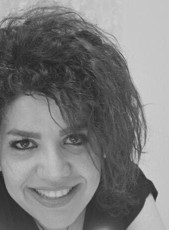
I am Maryam Tavakoli, and I was born in Tehran, the first child in a relatively large family and perhaps this chaos made me an extroverted girl. During my childhood, due to the Iran-Iraq war, I spent most of my time at my grandmother’s house in Isfahan, playing near Naqsh-e Jahan Square and getting captivated by the paintings from the Safavid era that adorned the walls. The magnificent architecture of that time drew me in, and the lapis lazuli and turquoise colors along with the arabesque patterns are still etched in my mind.
At the age of eleven, I became interested in painting classes at school, which mainly focused on drawing with pencils, as art classes were considered the least important subject at school, and I was the most enthusiastic student. All of this led me to attend an art school at the end of my middle school years to study graphic design. During that time in art school, I received my first relatively academic award from the head of education, marking the beginning of my artistic journey as I went on to university to nurture my inner passion. During my undergraduate studies in painting, I participated in supplementary classes to learn about the history of world art alongside my university courses. I was fond of reading poetry and my favourite poet was a woman named “Forough Farrokhzad”, whose poetry emphasizes femininity. Her poetry offers a complex portrayal of Iranian feminism, emphasizing women’s agency instead of reinforcing stereotypical notions of femininity. Her work challenges conventional views and presents a broader perspective on Iranian feminism, moving beyond traditional ideas of femininity.
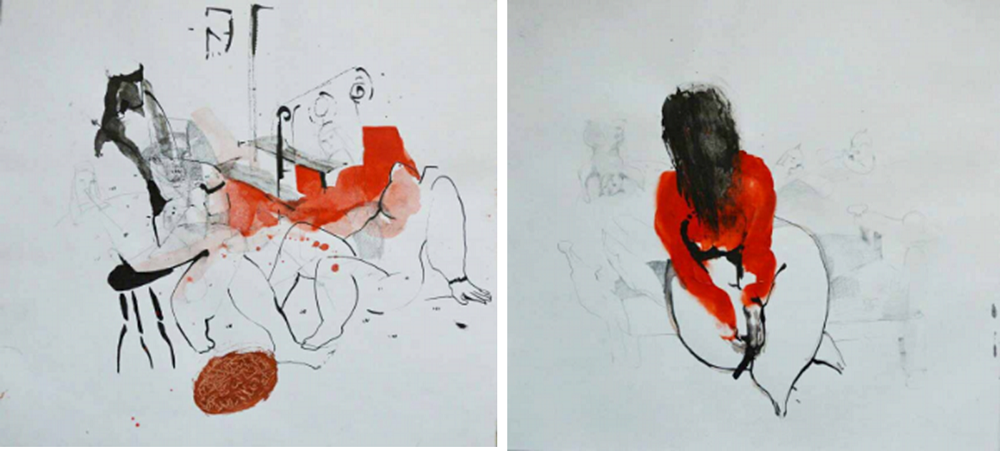
Imagining her poems inspired me to create a series called “Eastern Women.” Through these paintings, I discovered hidden emotions within myself; these women had experienced sexual assault, something, I had also encountered at a young age. In fact, the “Eastern Women” series was a narrative of my own adolescence and those women who had experienced such events but were afraid to express them, just like me.
To reconcile housewives with painting, instead of displaying my works in galleries, I brought them to the streets and parks to create a good bridge between ordinary people in my community and the art of painting.
As I progressed on my path, I realized that I needed to focus more on the paintings of my ancestors; therefore, I began studying the history of ancient Iranian art. The paintings from various periods of ancient Iran known as “negargari” caught my attention. Gradually, my paintings began to take on the colors and essence of past artworks as if I wanted to bring those figures from those miniatures into my contemporary paintings. Since I loved poetry, I read more of the Shahnameh—an exquisite work of Persian literature—and utilized its warlike atmosphere within my artistic space.
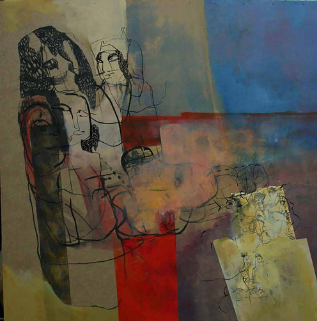
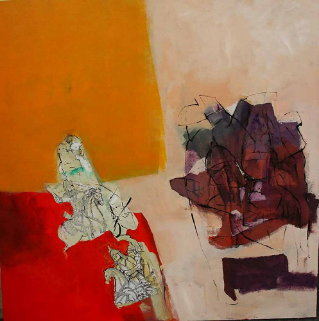
With the start of my master’s degree, I focused more on studying nature. For me, nature evoked visual elements (line, point, surface), and often I saw people trapped within rocks, mountains, and trees—similar to the women depicted in my earlier collections. Nature encompassed everything for me—from animals, which are an essential part of nature, to trees and humans. My master’s thesis emerged from this exploration and led to a collection called “Where I Live.”I felt that the joy of nature with its freshness and the animals living within it brought me happiness; thus, preserving it became very important to me. The mistreatment of animals and trees upset me deeply; therefore, many of my paintings have addressed these issues.
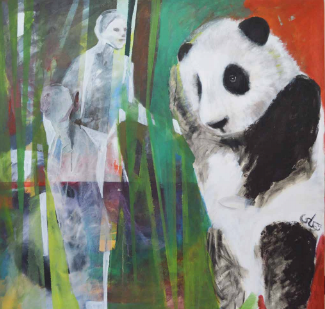
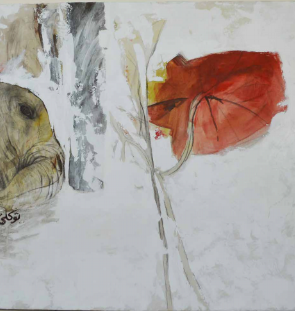
After completing my master’s degree, I spent some time teaching at the university.
However, I realized that teaching art needs to begin with children, so I began working with various children—children with disabilities, those from unstable backgrounds, and those with autism and syndromes. I gained fascinating experiences from them; they were the best artists I had ever encountered. I gave them love and received love in return, as if they were teaching me while I was teaching them. It was here that I decided to compile these experiences into a book so that educators in this field could benefit from them. I even taught pedagogy, a branch of art education, without having taken any formal classes in it, as this subject does not exist in my country. I thought about establishing an educational center for children and adolescents to be able to work more effectively in this area.

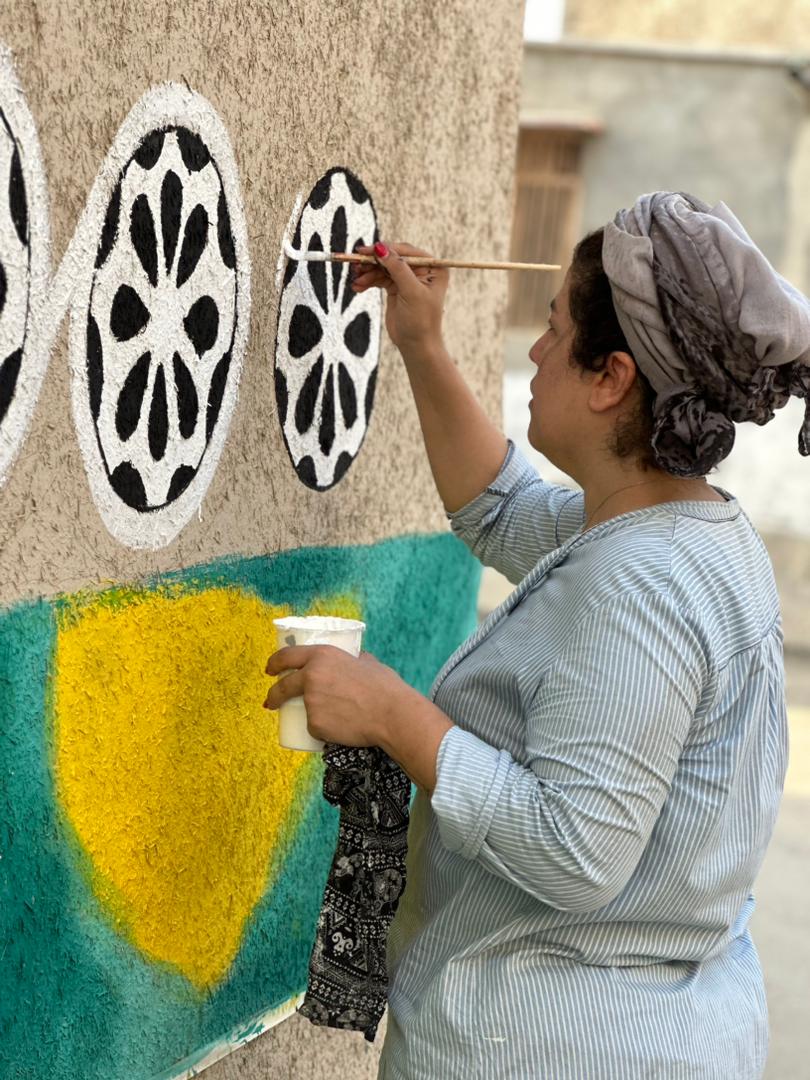
During the challenging time in Iran, I painted on the walls of the city, depicting female myths—women who had not been valued. I wanted to respond to the slogan “Women, Life, Freedom,” which was being shouted in my country. My urban paintings told the stories of women who had been forgotten. Now,as Maryam Tavakoli, a 43-year-old woman, mother, painter, sculptor, educator, and founder of an art school, I need to continue my journey by sharing my experiences with others.


No comment